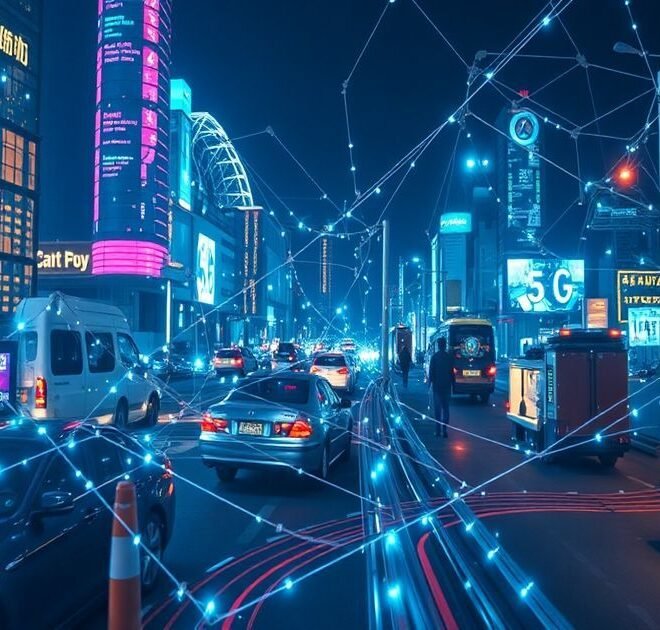

Introduction: The 5G-Netzwerk Revolution

The 5G-Netzwerk represents the fifth generation of mobile network technology, fundamentally reshaping how we connect and communicate in 2026. As the successor to 4G LTE, this advanced network infrastructure delivers unprecedented speed, minimal latency, and massive device connectivity that enables transformative applications across industries. Unlike previous generations focused primarily on smartphones, the 5G-Netzwerk is designed as a unified platform supporting everything from augmented reality to industrial IoT deployments. With global 5G adoption reaching critical mass this year, understanding its capabilities and implications has become essential for both consumers and businesses navigating our increasingly connected world.

What is a 5G-Netzwerk?

A 5G-Netzwerk is a sophisticated mobile communication system that operates on three distinct frequency bands: low-band (sub-1 GHz), mid-band (1-6 GHz), and high-band millimeter wave (24-40 GHz). This multi-band approach allows network operators to balance coverage area with data capacity and speed. The architecture relies on advanced technologies like network function virtualization (NFV) and software-defined networking (SDN), which replace traditional hardware-based network components with software-driven solutions. This transformation enables more flexible, scalable, and efficient network management while reducing operational costs.

The core promise of any 5G-Netzwerk is delivering peak data rates up to 10 Gbps, latency below 1 millisecond, and the ability to connect up to one million devices per square kilometer. These specifications aren’t just incremental improvements—they represent a quantum leap that makes real-time applications like remote surgery, autonomous vehicle coordination, and immersive virtual collaboration practically feasible. According to Wikipedia, the standardization process began in 2018, with commercial deployments accelerating globally through 2026.

Key Technical Features of 5G-Netzwerk

The 5G-Netzwerk introduces several groundbreaking technical capabilities that distinguish it from previous mobile generations. These features work synergistically to create a network that’s faster, smarter, and more responsive than ever before.

  • Enhanced Mobile Broadband (eMBB): Delivers multi-gigabit speeds for high-quality video streaming and VR applications
  • Ultra-Reliable Low-Latency Communications (URLLC): Guarantees sub-millisecond response times for critical applications
  • Massive Machine-Type Communications (mMTC): Supports dense IoT deployments with efficient power consumption
  • Network Slicing: Creates multiple virtual networks on shared physical infrastructure
  • Dynamic Spectrum Sharing: Optimizes frequency utilization across different service requirements

These capabilities enable the 5G-Netzwerk to serve diverse use cases simultaneously—from streaming 8K video on mobile devices to controlling industrial robots with precision. The network’s intelligence layer continuously adapts to traffic patterns, predicting demand and allocating resources proactively rather than reactively.

Architecture and Infrastructure Components

Building a robust 5G-Netzwerk requires significant infrastructure modernization. The traditional cell tower model evolves into a dense mesh of small cells, each covering smaller geographic areas but collectively providing seamless coverage. These miniaturized base stations can be deployed on street furniture, building facades, and even indoor environments, creating a heterogeneous network (HetNet) architecture.

Massive MIMO (Multiple Input Multiple Output) technology plays a crucial role, utilizing antenna arrays with 64 or more elements to serve multiple users simultaneously. Beamforming directs focused signal streams toward specific devices rather than broadcasting in all directions, improving both efficiency and security. Edge computing nodes distributed throughout the 5G-Netzwerk bring processing power closer to end-users, reducing latency for time-sensitive applications.

For more detailed insights into network infrastructure deployment strategies, explore our technical resources.

Transformative Applications and Use Cases

The 5G-Netzwerk is catalyzing innovation across virtually every sector by providing the connectivity foundation for advanced digital services. In smart cities, interconnected sensors monitor traffic flow, air quality, and energy consumption in real-time, enabling data-driven urban planning and sustainability initiatives. The automotive industry leverages 5G-Netzwerk capabilities for vehicle-to-everything (V2X) communication, allowing cars to share information about road conditions, hazards, and traffic patterns with other vehicles and infrastructure.

Healthcare has embraced remote patient monitoring and telesurgery, where the network’s reliability ensures that critical procedures can be performed by specialists located hundreds of miles away. Industrial automation reaches new heights with wireless control of machinery and real-time quality inspection using computer vision. The entertainment sector delivers immersive experiences through augmented and virtual reality applications that require the bandwidth and low latency only 5G-Netzwerk can provide.

Key applications include:

  • Remote robotic surgery and telemedicine
  • Autonomous vehicle coordination and platooning
  • Smart grid management and energy distribution
  • Industrial IoT and predictive maintenance
  • Immersive AR/VR training and entertainment

Challenges and Deployment Considerations

Despite its promise, deploying a comprehensive 5G-Netzwerk presents significant challenges. The high-frequency millimeter wave spectrum, while offering massive bandwidth, suffers from limited range and poor penetration through obstacles, requiring dense infrastructure investments. Network operators must balance coverage expansion with return on investment, particularly in rural areas where subscriber density doesn’t justify aggressive deployment.

Security concerns have intensified with the 5G-Netzwerk expansion, as the increased attack surface introduces new vulnerabilities. The reliance on software-defined components creates potential entry points for malicious actors, necessitating robust zero-trust architectures and continuous security monitoring. Additionally, the geopolitical landscape has complicated equipment sourcing decisions, with many countries implementing strict regulations on network component suppliers.

Health-related debates continue regarding radiofrequency exposure, though scientific consensus maintains that 5G-Netzwerk emissions remain within safe limits. Public education and transparent communication about safety standards are crucial for addressing community concerns and accelerating deployment acceptance.

Future Outlook: 5G-Netzwerk in 2026 and Beyond

As we progress through 2026, the 5G-Netzwerk ecosystem continues evolving with advanced features like artificial intelligence-driven network optimization and integrated satellite connectivity. These enhancements will enable truly ubiquitous coverage, bridging the digital divide between urban and remote regions. The convergence of 5G-Netzwerk with emerging technologies such as quantum computing and advanced robotics will unlock capabilities we’re only beginning to imagine.

Research into 6G networks is already underway, promising terahertz frequencies and sub-millisecond latency that will make the current 5G-Netzwerk seem rudimentary by comparison. However, the foundation being laid today will support this future evolution, with network softwarization and virtualization providing the flexibility needed for seamless upgrades.

For ongoing updates about network technology developments, visit our news portal.

Conclusion

The 5G-Netzwerk has transitioned from a promising technology to the backbone of modern digital infrastructure in 2026. Its impact extends far beyond faster smartphone internet, enabling transformative applications that reshape industries and improve quality of life. While deployment challenges remain, the trajectory is clear: 5G-Netzwerk will continue expanding its reach and capabilities, driving innovation across the global economy. Organizations and individuals who understand and leverage these networks position themselves at the forefront of the digital revolution, ready to capitalize on opportunities that were impossible just a few years ago.